
The IFRS Sustainability Standards are global reporting rules created to help companies disclose clear and comparable information about their environmental, social, and governance risks. Issued by the International Sustainability Standards Board (ISSB), these standards focus on how sustainability issues, especially climate change, affect a company’s financial performance and future prospects. The aim is to give investors consistent information so they can better judge long-term risks and opportunities.
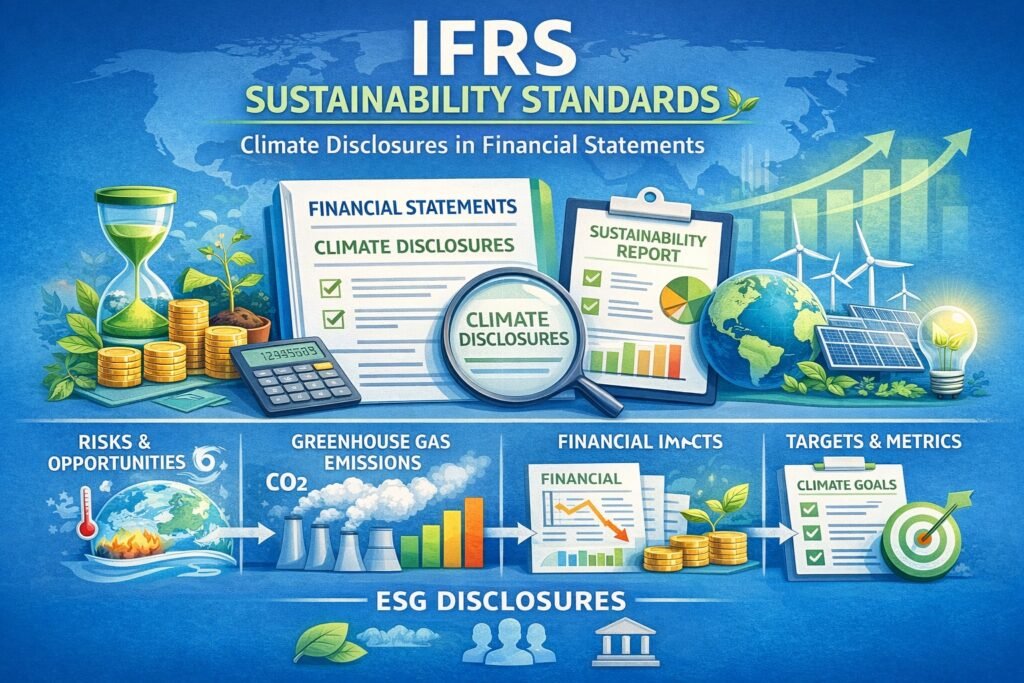
The standards mainly require companies to explain how sustainability risks are managed, how they affect strategy and cash flows, and what targets or metrics are used to track progress. For example, firms may need to report greenhouse gas emissions, climate-related risks, and how their business model could be affected by environmental changes or new regulations. This links sustainability reporting more closely with financial reporting rather than treating it as a separate corporate responsibility report.
For companies, this means stronger data systems, closer coordination between finance and sustainability teams, and more formal internal controls over non-financial information. It also increases transparency for investors and lenders, who are increasingly using sustainability information to make funding decisions and assess long-term stability.
