
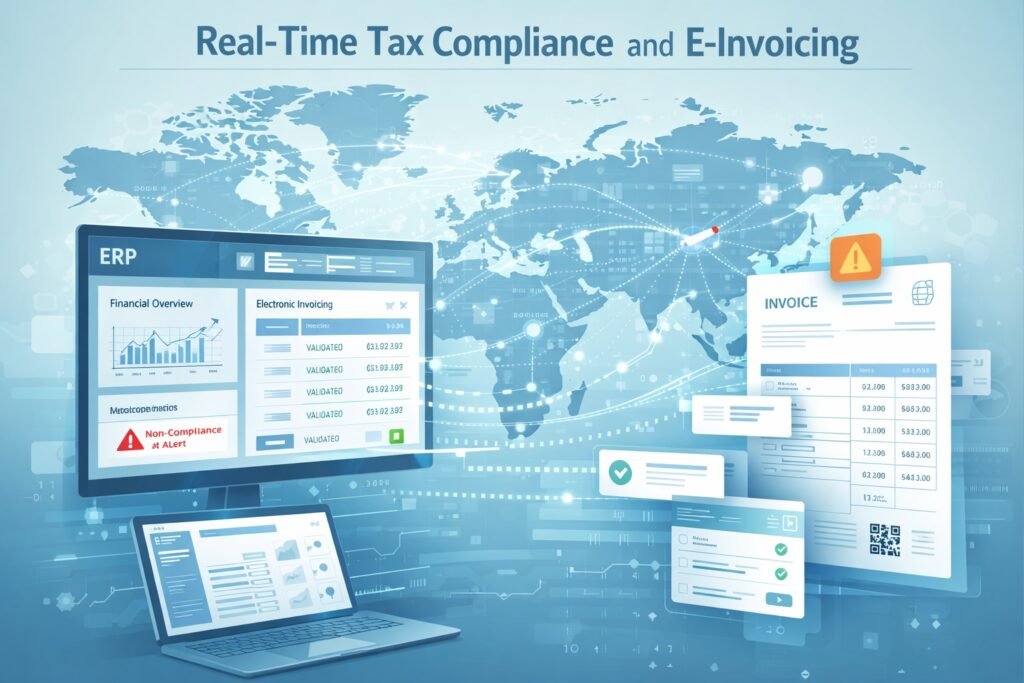
Real-time tax compliance and e-invoicing are systems where businesses report transactions to tax authorities immediately or shortly after they happen, instead of waiting for monthly or annual filings. Governments use digital invoicing platforms that require companies to issue invoices in a standard electronic format, often validated by the tax authority before or after the invoice is sent to the customer. This helps reduce tax evasion, improve transparency, and give authorities faster visibility into business activity.
For companies, this means tax compliance becomes part of the daily transaction process rather than a periodic reporting exercise. Accounting systems must connect directly with government platforms, ensure invoice data is accurate at the time of sale, and maintain consistent tax codes and documentation. Errors that were once corrected later can now block invoices, delay payments, or trigger penalties.
As more countries adopt these systems, businesses operating internationally must adapt to multiple digital tax frameworks, each with different formats, timelines, and approval rules. This pushes firms to invest in automated tax engines, stronger data controls, and integrated ERP systems so compliance happens in real time with minimal disruption to operations.
