
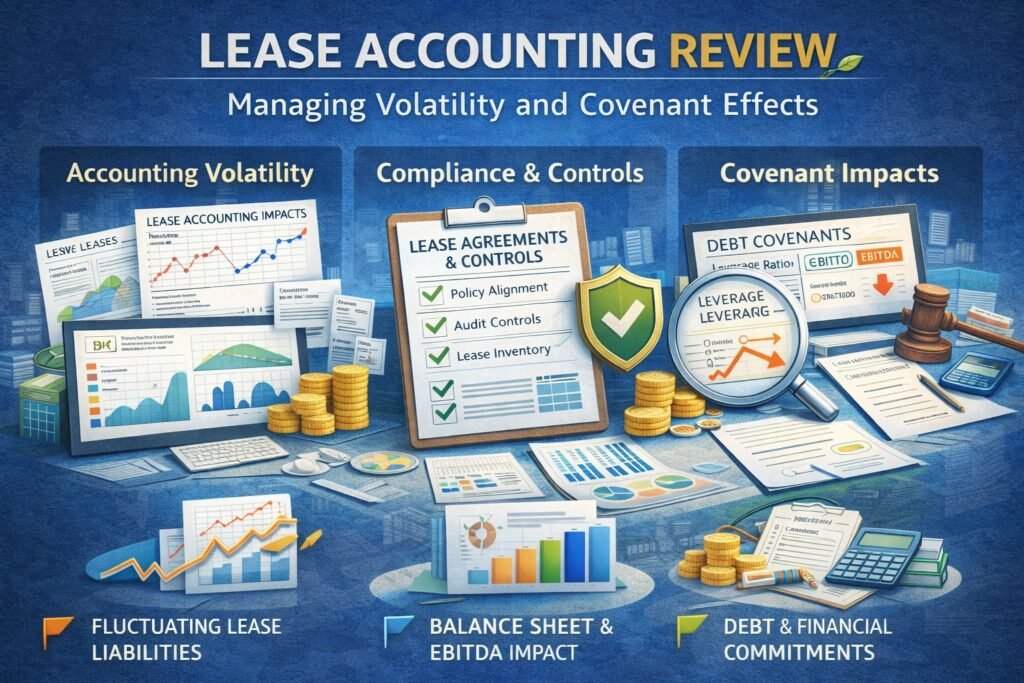
Lease accounting standards require most leases to be recorded on the balance sheet as a right-of-use asset and a lease liability. This increases reported debt and affects key financial ratios such as leverage and interest coverage. When lease terms change, discount rates move, or contracts are reassessed, the accounting values can shift, creating volatility in reported assets, liabilities, and expenses even if the underlying business activity has not changed.
This volatility can affect loan covenants tied to balance sheet strength or profitability. Higher lease liabilities may push leverage ratios above permitted levels, while front-loaded interest expense can reduce early-period earnings. Companies therefore need to review lease portfolios regularly, monitor how accounting changes affect covenant calculations, and communicate with lenders if adjustments risk breaching thresholds.
Effective management involves maintaining accurate lease data, reassessing discount rates when required, and modelling the financial impact of renewals, modifications, or new contracts before signing them. Strong coordination between finance, treasury, and legal teams helps ensure leasing decisions consider both operational needs and their accounting and covenant consequences.
