
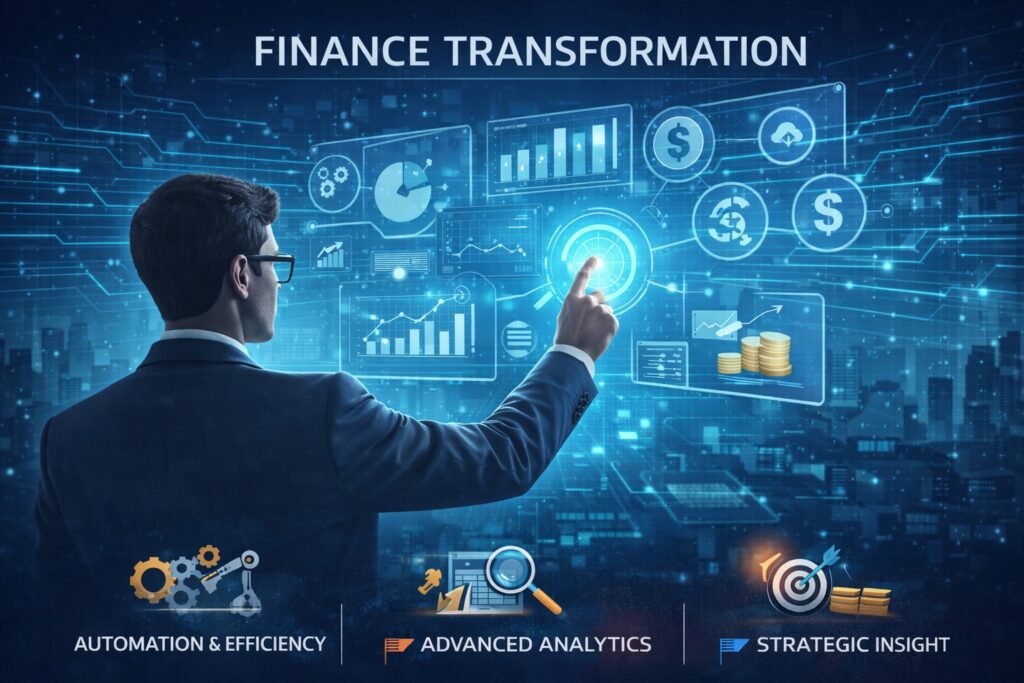
Finance transformation refers to the process of redesigning the finance function so it supports strategy and decision-making, not just bookkeeping and reporting. It usually involves automating routine tasks, improving data quality, and moving toward integrated digital systems such as modern ERPs and analytics platforms. The goal is to reduce manual work, shorten reporting cycles, and give management faster, more reliable insights into performance and risks.
A transformed finance function focuses more on planning, forecasting, and business partnering. Finance teams spend less time collecting numbers and more time interpreting them, advising leadership, and evaluating future scenarios. This requires new skills, stronger data governance, and clearer processes that connect finance with operations, procurement, and strategy. When done well, finance becomes a forward-looking function that helps guide decisions rather than simply recording the past.
