
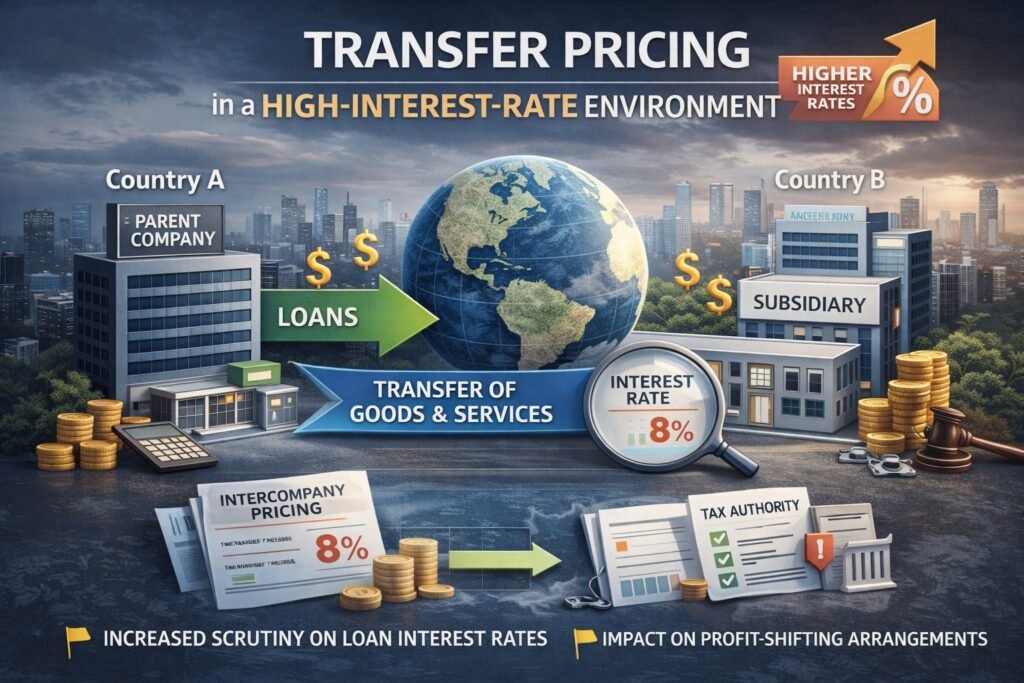
Transfer pricing refers to how multinational companies set prices for transactions between their own related entities in different countries, such as loans, services, or goods. In a high-interest-rate environment, this becomes more sensitive because financing costs rise and tax authorities expect intercompany interest rates to reflect real market conditions. If a company continues using older, lower rates, it may understate income in lending entities or overstate costs in borrowing entities, increasing the risk of tax disputes.
Higher interest rates also affect how companies structure intercompany loans and cash pooling arrangements. Borrowing entities may face heavier interest expenses, which can reduce profits in high-tax countries and attract scrutiny from regulators. Tax authorities often review whether companies truly need the level of debt they carry and whether the terms match what independent parties would agree to under similar market conditions.
As a result, companies must regularly update benchmarking studies, review loan terms, and document the commercial reasoning behind their financing structures. Strong documentation and market-based pricing help demonstrate that intercompany transactions follow the arm’s length principle, reducing the risk of adjustments, penalties, or double taxation across jurisdictions.